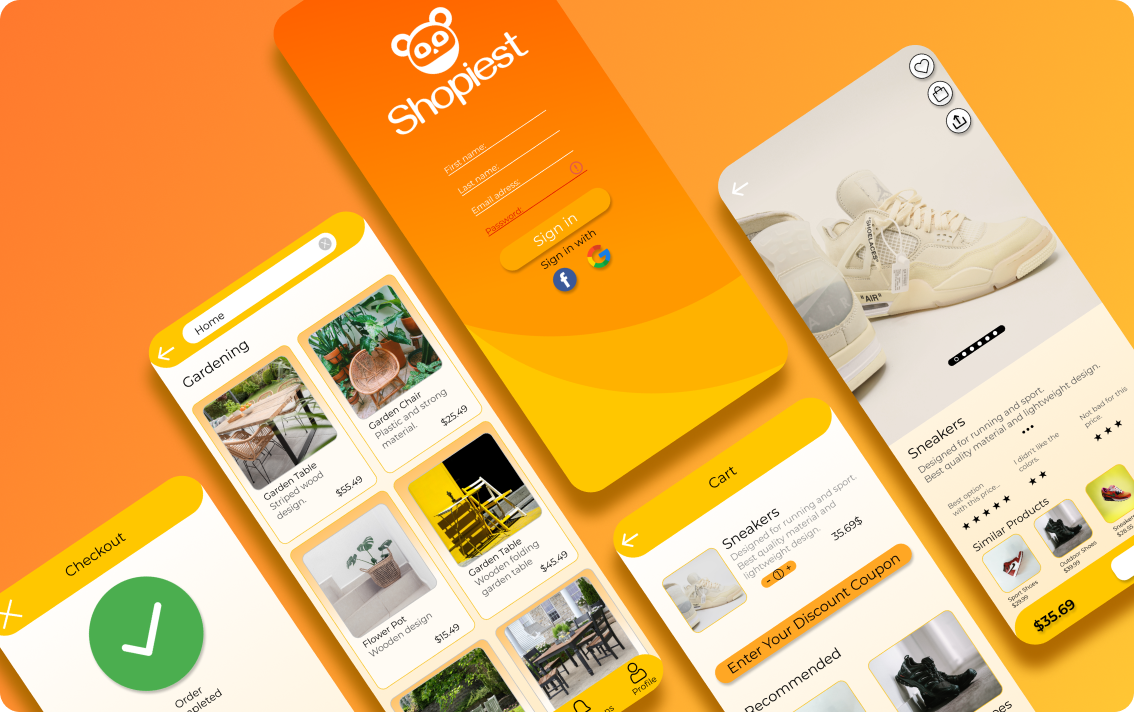
The Product
Shopiest is an e-commerce application which enables people to find products in a large scale. Shopiest strives to deliver high quality products with trackable delivery methods. Shopiest targets customers like people who want to buy products with adequate and accurate descriptions.
Project Duration
April 2022 to June 2022
The Problem
Busy and detail oriented people want to find adequate information related to products and schedule delivery time.
The Goal
Design an app for Shopiest that allows users to find detailed information related to products and set delivery time.
My Role
UX designer designing an app which named Shopiest from conception to delivery.
Responsibilities
Conduct interviews, paper and digital wireframing, low and high-fidelity prototyping, conducting usability studies, accounting for accessibility, and iterating on designs.
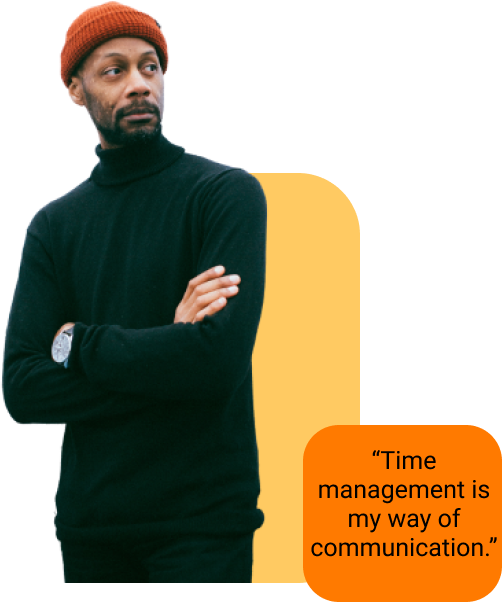
Interviews and empathy maps conducted to understand the users I’m designing for and their needs. A primary user group identified through research was working adults who want to schedule deliveries.
This user group confirmed initial assumptions about e-commerce customers, but research also revealed that time was not the only factor limiting users from tracking deliveries.
Other user problems included lack of description for products, low image quality and hard to find product because of search and filter options.
Scheduling
Working adults are too busy to track deliveries. They want to know delivery will be happen when and where
Accessibility
E-commerce platforms are not equipped with assistive technologies
Reviews
Many application does not give importance to reviews which should be essential
Age: 33
Education: College graduate
Hometown: California, USA
Family: Single
Occupation: Mobile App Developer
Goals:
To Schedule each work day and know what is coming
Frustrations:
"It is important to know timing of deliveries. I don't want to be interrupted while I am conducting my meetings.
Michael is a mobile app developer and he has a busy schedule to manage his work meetings. Even though, he likes to spend time on e-commerce pages, he want to schedule his deliveries and want to know when he will grab his new products.
Age: 40
Education: College Graduate
Hometown: San Francisco, USA
Family: Married, 1 child
Occopation: Teacher
Goals
To learn each feature of the product from the retailer
Frustrations:
"Sometimes my orders are not same as that they monitore in the websites"

Ashley is a teacher in the high school and always work during day time. She usually do research before she buy product online. She believes if there is a money to spend, it should be worthy product.
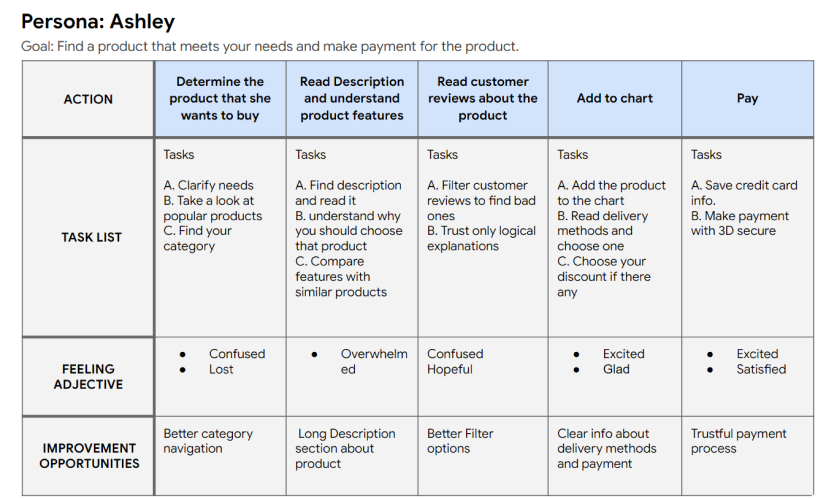
Mapping Ashley’s user journey revealed how helpful it would be for users to have access to a dedicated Shopiest App.
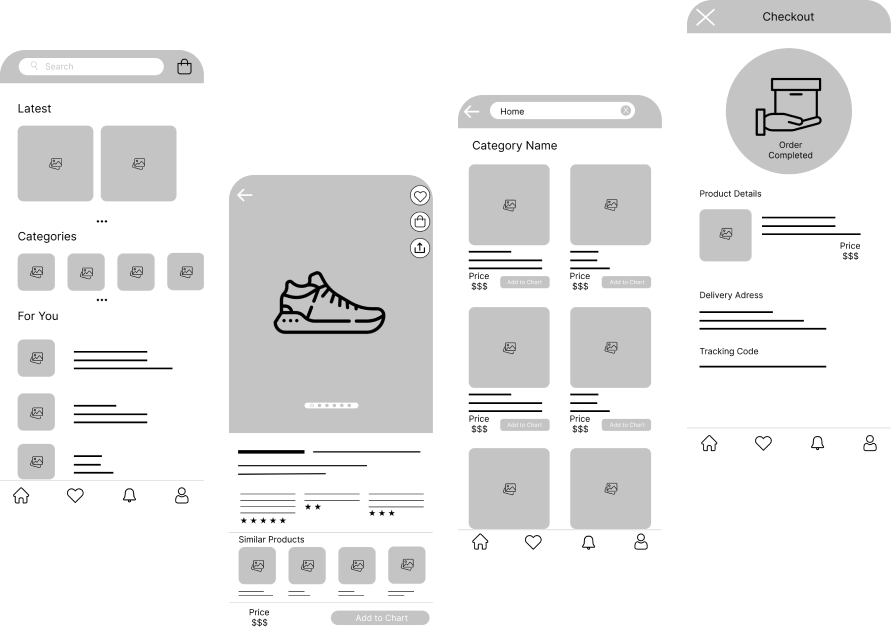
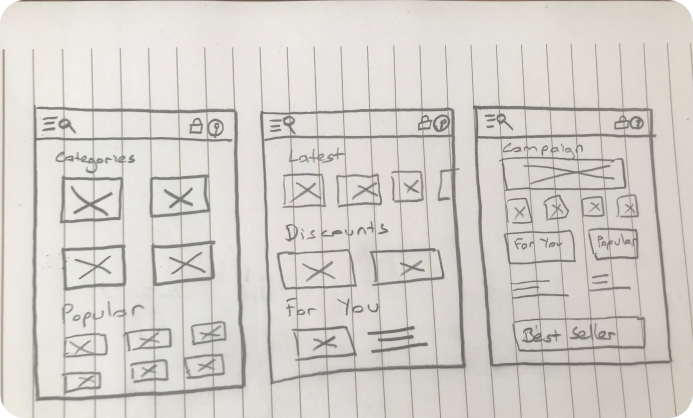
Taking the time to draft iterations of each screen of the app on paper ensured that the elements that made it to digital wireframes would be well-suited to address user pain points.
As the initial design phase continued, I made sure to base screen designs on feedback and findings from the user research.
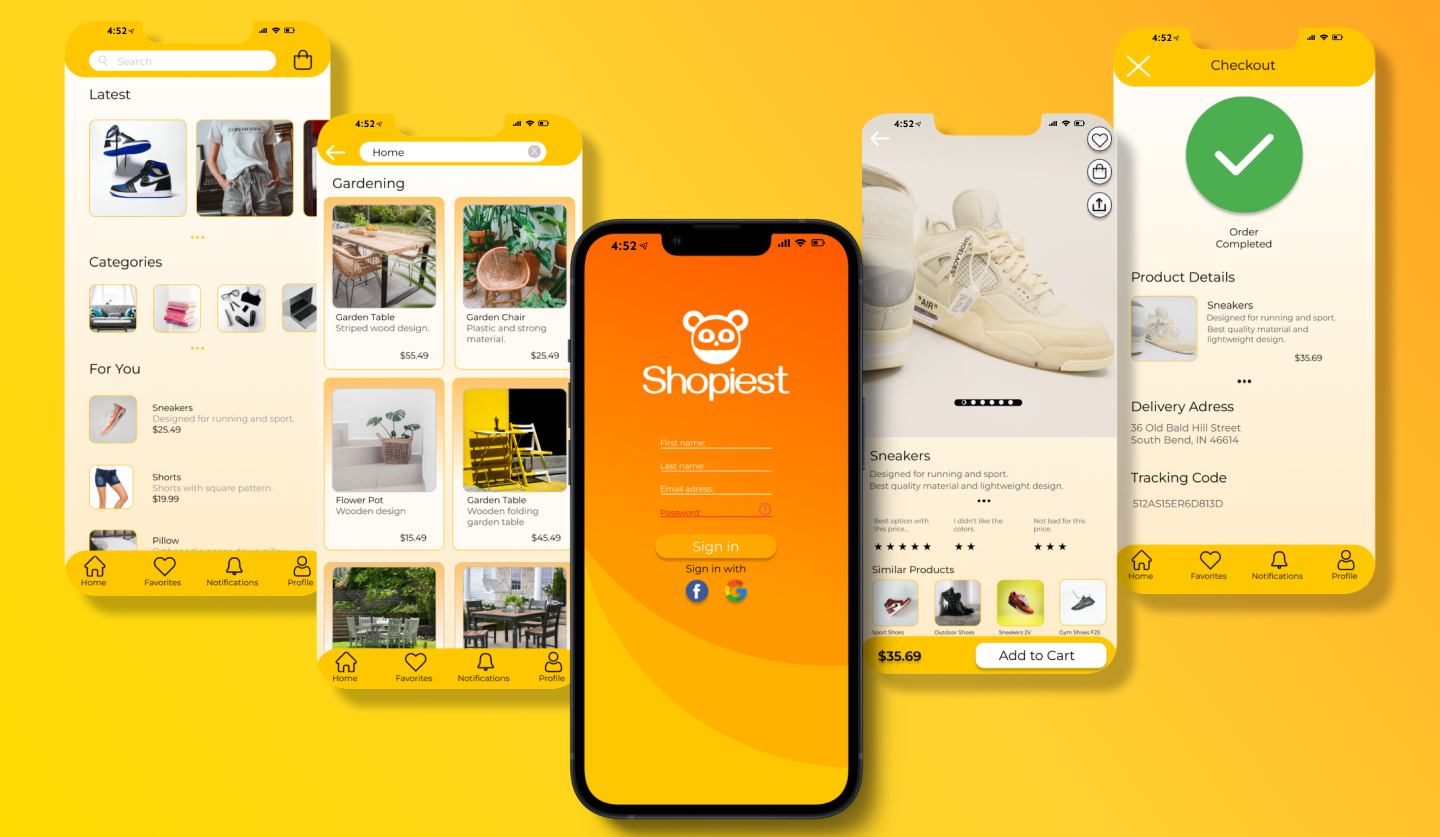
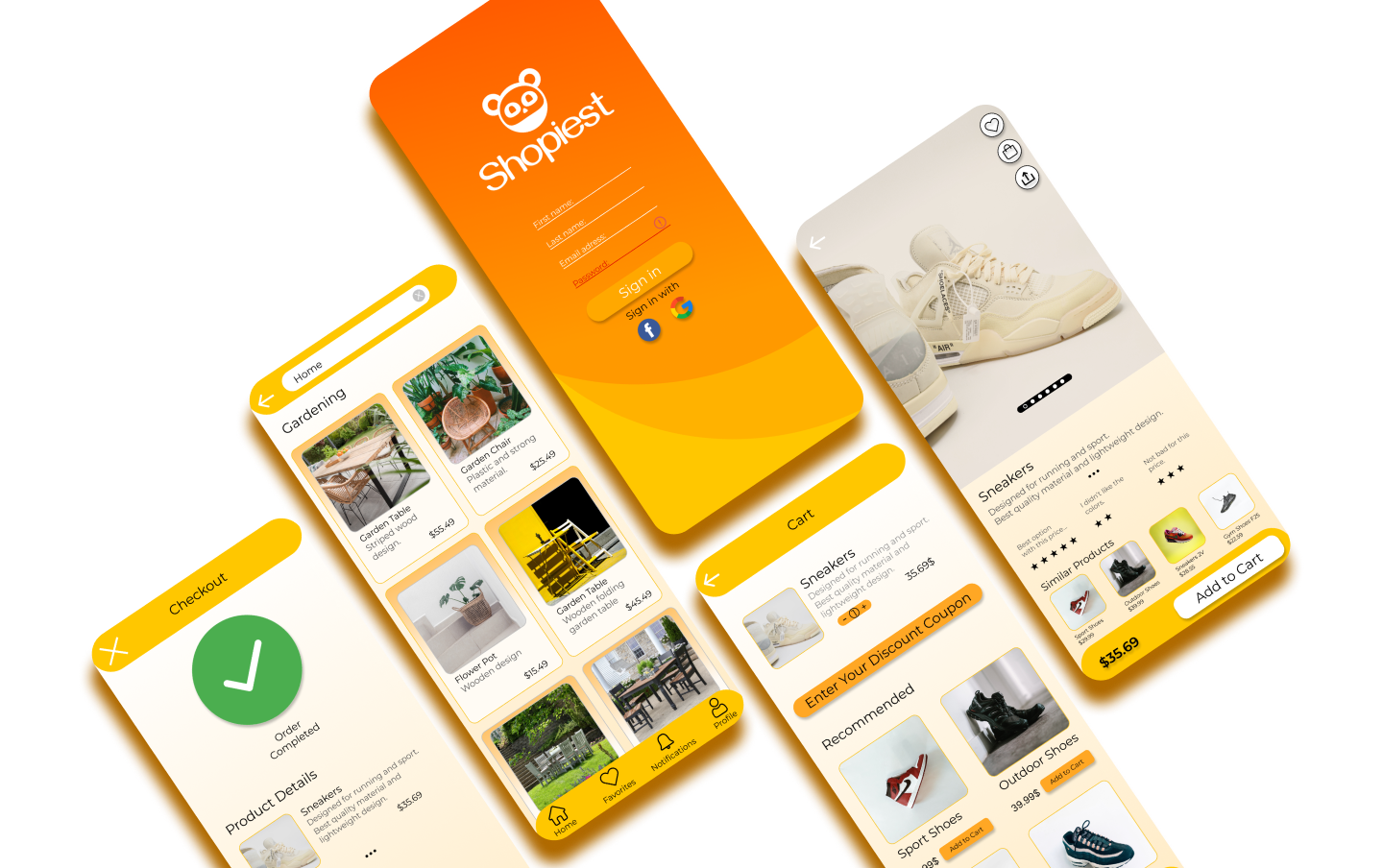
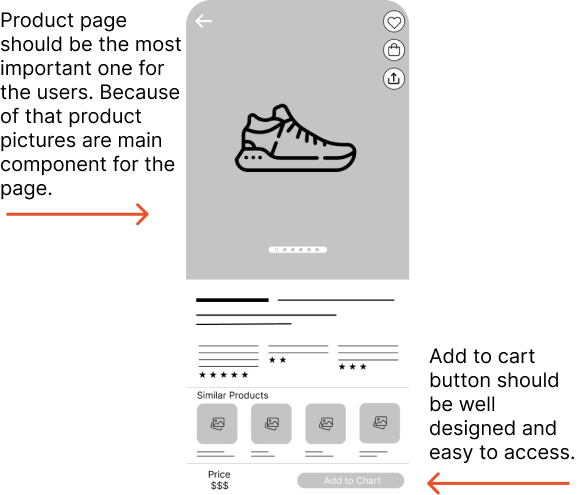
Product pictures are significant for the user’s perspective. Reviews and descriptions are placed right under the picture which enable users to read what they want.
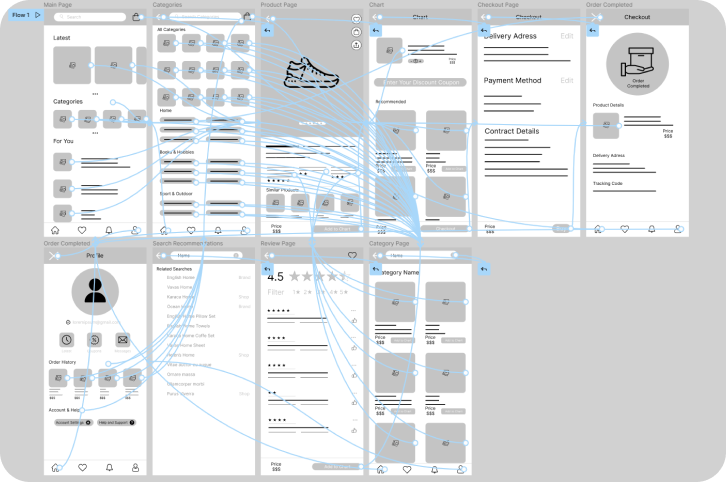
The low-fidelity prototype connected the primary user flow of building and ordering a product, so the prototype could be used in a usability study with users.
View the Shopiest
low-fidelity prototype.
I conducted two rounds of usability studies. Findings from the first study helped guide the designs from wireframes to mockups. The second study used a high-fidelity prototype and revealed what aspects of the mockups needed refining.


Users want to order product quickly
Users want to search with the search bar
Users want to read reviews
The category page should be more accessible
Reviews related to product should be filtered
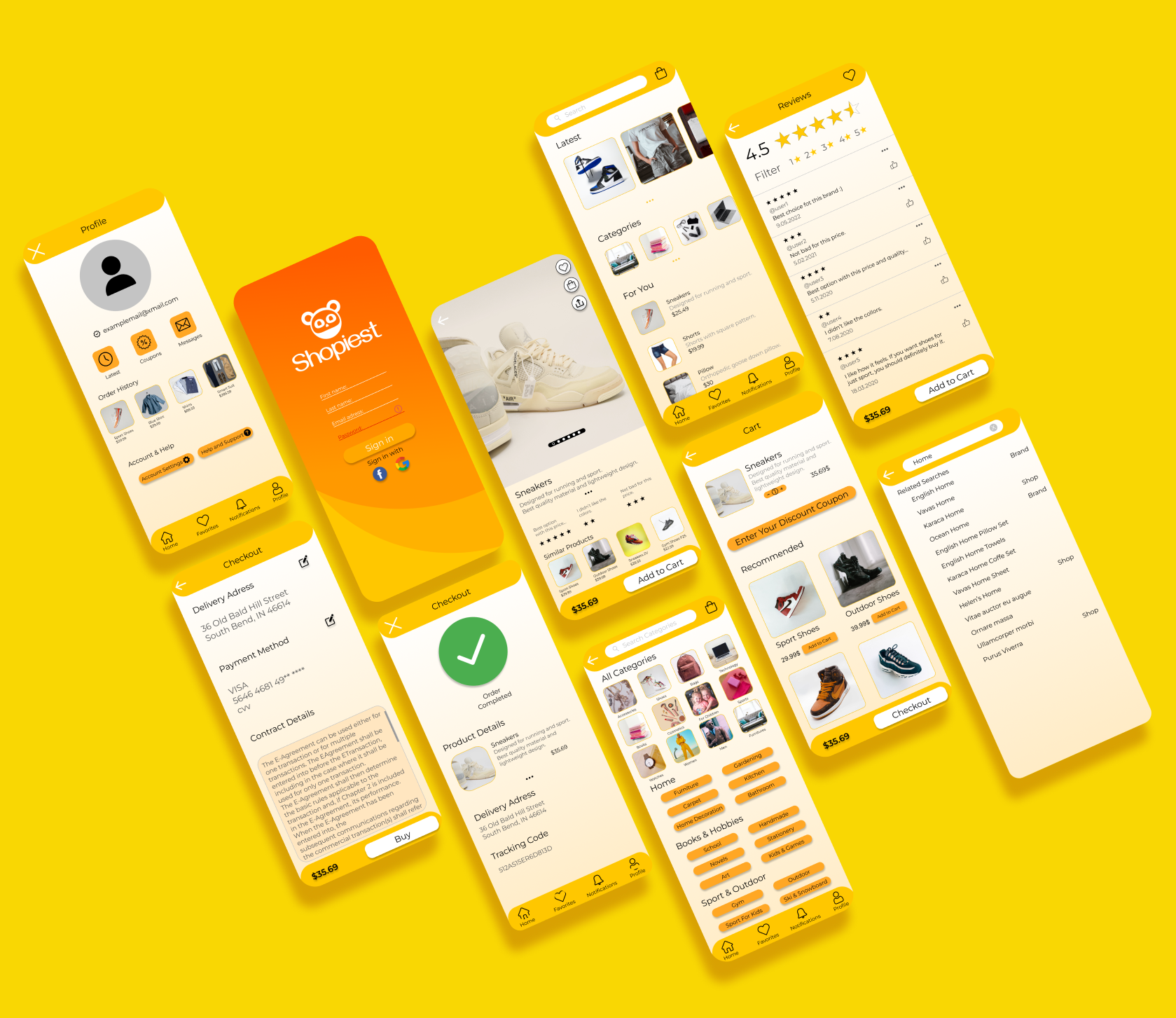
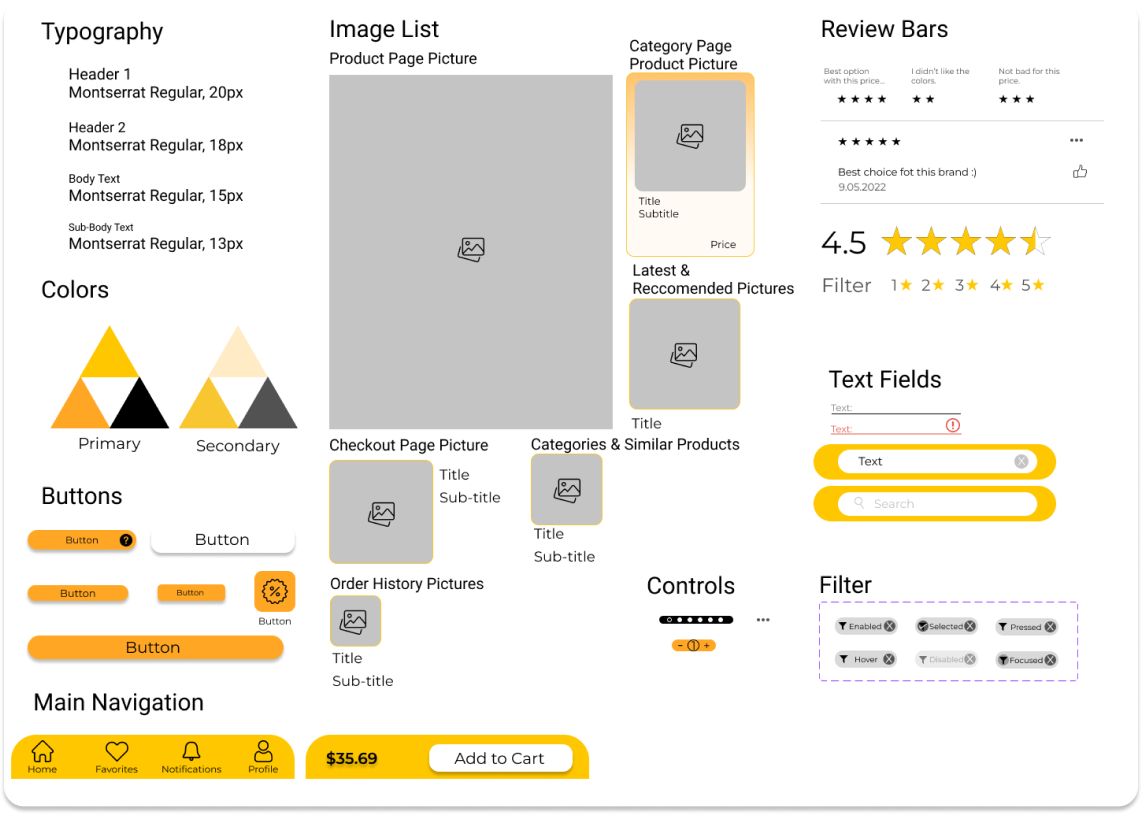
Early designs allowed for some customization, but after the usability studies, I fixed spacing, some typos and consistency of structure.
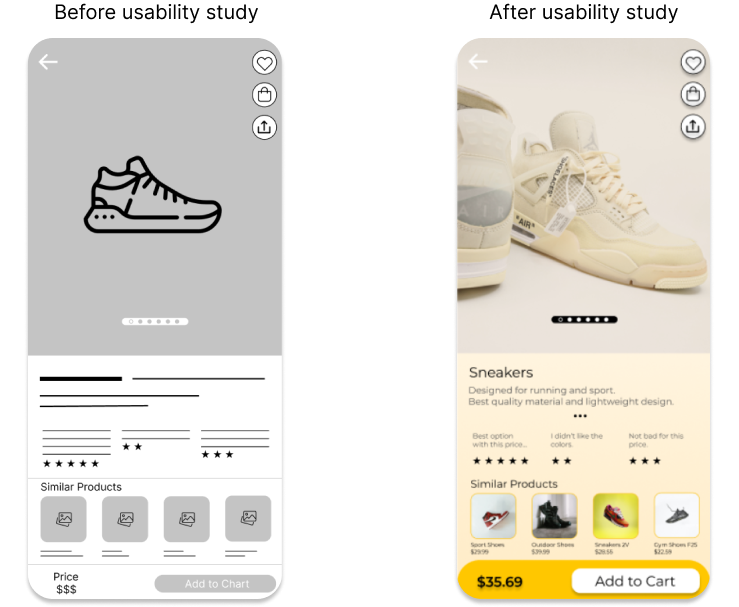
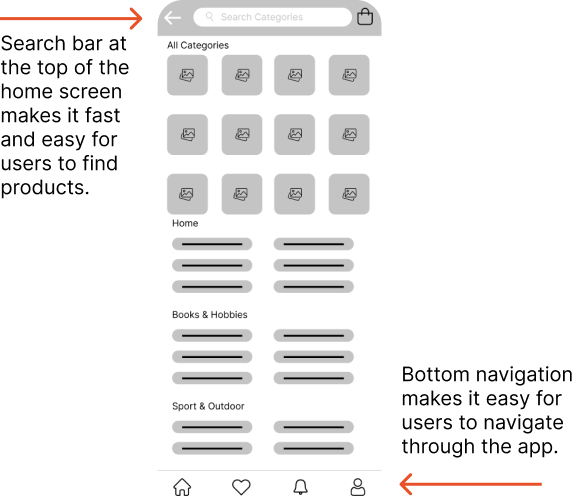
After usability tests, based on the feedbacks, category page revised and some buttons removed which creates complexity. Navigation bars revised and turned into smooth structure.
.png)


Provided access to users who are vision impaired through adding alt text to images for screen readers.
Used icons to help make navigation easier.
Used detailed imagery for products to help all users better understand the designs.
Impact
The app makes users feel like Shopiest really thinks about how to meet their needs.One quote from peer feedback:“The app made it so easy and fun to order and research a product! I would definitely use this app.”
What I learned
While designing the Shopiest app, I learned that the first ideas for the app are only the beginning of the process. Usability studies and peer feedback influenced each iteration of the app’s designs.
Conduct another round of usability studies to validate whether the pain points users experienced have been effectively addressed.
Conduct more user research to determine any new areas of need.
Thank you for your time reviewing my work on the Shopiest app!
If you would like to see more or get in touch!